
Unlock Exclusive Discount : Your Gateway to Premium Healthcare with Medinex India Health Value Card.
Partner Hospitals
Cities Served
Happy Patients Every Year
Resposne time
anytime, anywhere.
Fast Response · No Hidden Charges
Treatment
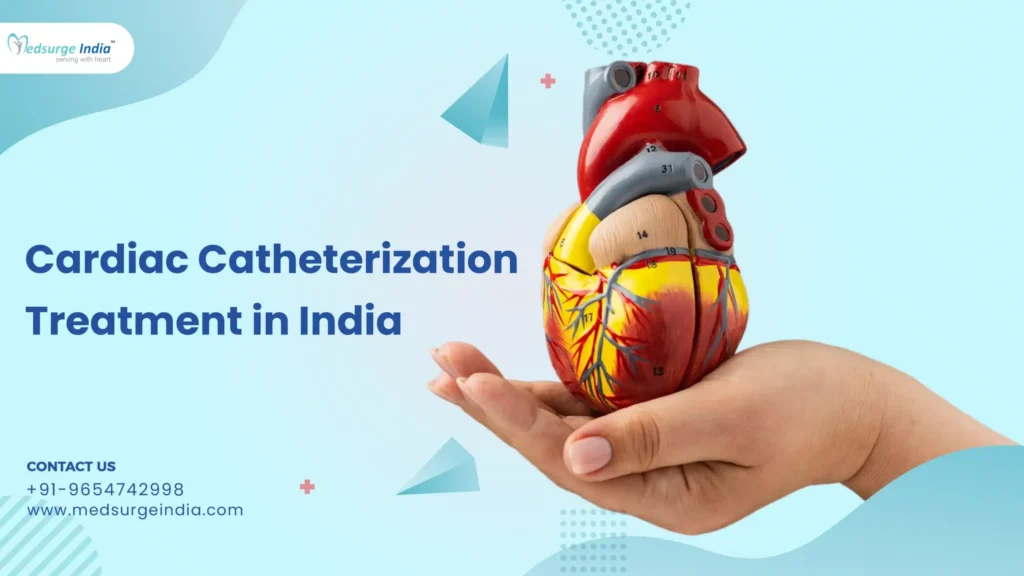
Cardiac catheterization is a test used to treat certain heart and blood vessel conditions, such as irregular heartbeats and clogged arteries. This test uses a thin, hollow tube called a catheter, which is guided through the blood vessels to the heart.
Cardiac catheterization is a common method that is used to diagnose and treat a variety of heart problems. This test may be required if one has:
cardiac catheterization is significantly influenced by the specific type of procedure being performed. Therefore, it is advisable to familiarize oneself with the various types to better understand the associated costs.
In the case of right heart catheterization, the physician introduces a catheter into the blood vessels via the elbow, neck, or leg to reach the right side of the heart. This procedure is utilized to assess blood oxygen levels and measure blood pressure within the arteries during cardiac contractions.
Conversely, left heart catheterization involves accessing the left side of the heart by inserting the catheter into an artery from the arm, wrist, or leg. This procedure is primarily employed for angiography to evaluate the extent of blockage in the coronary arteries. Additionally, left heart catheterization can be utilized for intravascular ultrasound, biopsy, and fractional flow reserve assessments.
Cardiac catheterization Treatment cost in India starts from 5800 USD. The price of the treatment can also be extended to 12000 USD. This usually depends on the patient’s choice of procedure and the type of location or hospital.
| Country | Price Starting From |
| India | 5800 USD |
| UAE | 14000 USD |
| UK | 65000 USD |
| USA | 60000 USD |
| Turkey | 35000 USD |
Prior to undergoing cardiac catheterization, the following assessments may be conducted:
A physician will administer local anesthesia, which serves as a numbing agent, at the location where the catheter will be inserted. This insertion point, referred to as the access site, may be located in the arm, thigh, neck, or beneath the collarbone. The physician will then insert a needle into a blood vessel at this access site. To facilitate access to the blood vessel, a small incision may be made. Following this, a guidewire is introduced through the needle, which is subsequently removed. A small tube, known as a sheath, is then positioned within the blood vessel around the guidewire. The guidewire is then taken out. The catheter is subsequently inserted through the sheath. Throughout this procedure, the physician will take x-rays at intervals to determine the optimal placement of the catheter’s tip. Once the catheter is correctly positioned, it may be utilized for various diagnostic assessments or cardiac treatments.
The following procedures can be conducted through cardiac catheterization:
Similarly, other cardiac treatments like heart valve replacement, balloon valvuloplasty, and other cardiac procedures will be performed using cardiac catheterization.
The potential risks linked to a cardiac catheterization procedure encompass the following:
– Hemorrhaging or contusions at the catheter insertion site
– Discomfort at the catheter insertion site
– Formation of blood clots
– Risk of infection
– Allergic reactions to the anesthetic agents utilized
– Arrhythmias
– Ischemia, characterized by reduced blood flow to the cardiac tissue
– Angina
– Myocardial infarction.
One of the main reasons why patients from all over the globe choose India for medical treatment is that the cost of the treatment is much less compared to other developed countries and healthcare facilities are on par with international standards. Not only that Indian doctors are known to be one of the best and these doctors have experience and deep knowledge where they have worked and studied in top international institutions.
Share reports and get expert guidance before you travel.
Clear package guidance based on your reports and hospital choice.
Invitation letter assistance + end-to-end travel coordination.
Accommodation suggestions and pickup support on request.
Quick scheduling with top hospitals and specialists.

New Delhi, India
JCI Accredited
Multi Specialty

Gurugram, India
JCI Accredited
Multi Specialty

Gurugram, Inidia
JCI Accredited
Multi Specialty

New Delhi, India
JCI Accredited
Multi Specialty

Mumbal, India
JCI Accredited
Multi Specialty
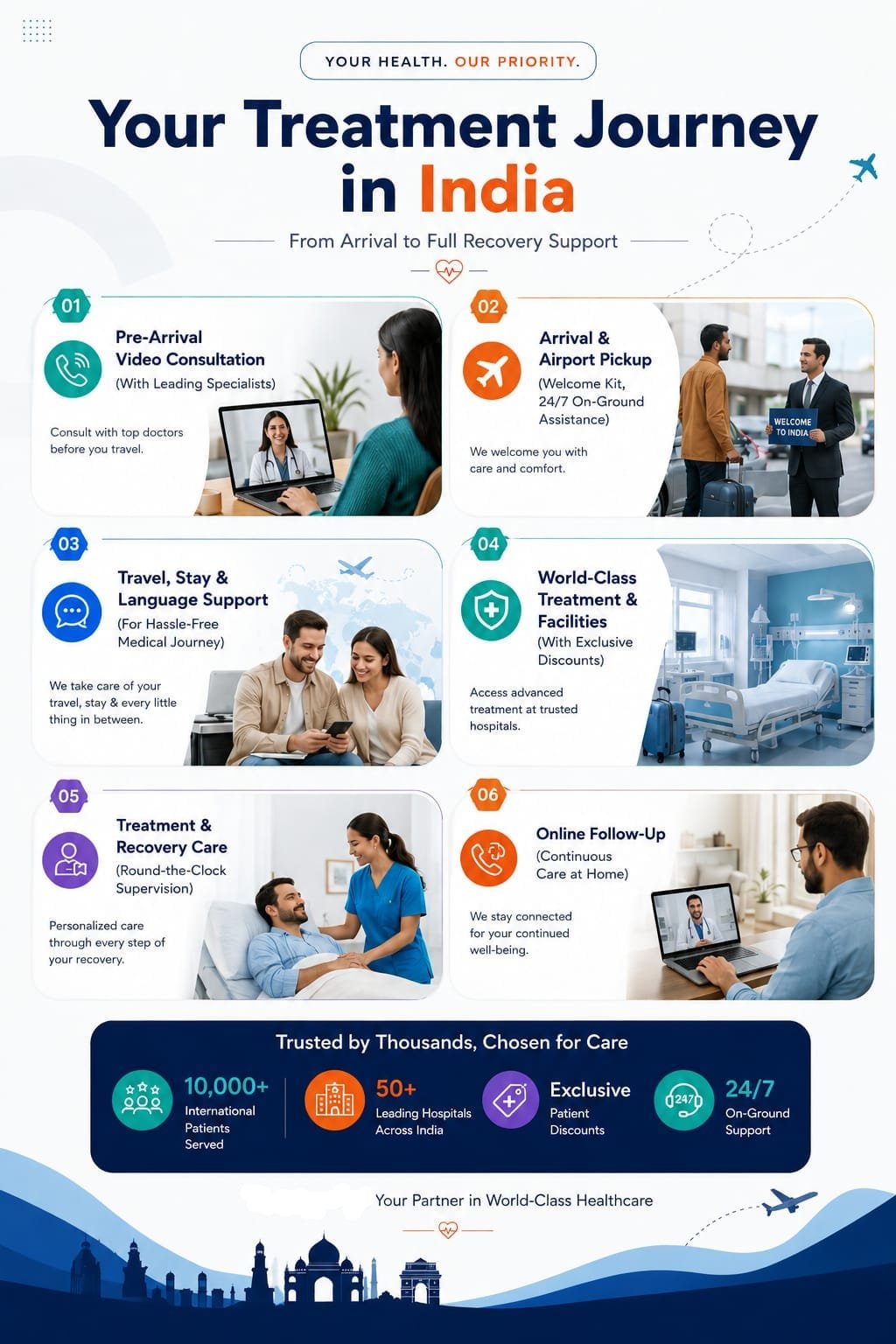
Connect with India’s top specialists within 24 hours.
Your data is safe with us. We respect your privecy.

Fill in your details below to start a personalized conversation on WhatsApp.
Your data is safe with us. We respect your privecy.
Your data is safe with us. We respect your privecy.